Sunday, August 13, 2006

this blog is closed


Gentle & Not-so-gentle readers, this blog has now closed and is moving to another home. There will be no new posts and comments have now shut down. Please remember to update any links on your sites... and do come with us to... Wordsbody

Monday, August 07, 2006

PHARAOH

We are not a country of the blind
for you to be so unkind
and unleash flawed wisdom
of the fabled one-eyed king.
We know what you will bring,
another season of pestilence.

Your promised second coming
and uncouth planning,
is insult to hurts
from excruciating first coming.

We are not a country of the blind,
tolerance is no longer our virtue,
endurance has reached breaking point,
hindsight has steeled our resolve.

O gap-toothed Pharaoh,
watch my people boldly go
beyond the reach of tyranny.

O gap-toothed Pharaoh
stay in your castle on the hill,
lay in laps of the brazen lady,
swim in pool of sordid loot,
feast on menu of memories,
drown in red sea of regrets.
We do not give a hoot
for your false love song,
hindsight has opened our eyes,
pain has made us strong.

O gap-toothed Pharaoh,
we are not a country of the blind.

© Emman Usman Shehu

*First published in The Sun, Lagos, Nigeria, on Sunday 30 July; Reproduced with permission

adichie & afolabi

Chimandanda Ngozi Adichie and her long awaited 2nd novel are about to land, folks...

The author of Purple Hibiscus and the soon to be released Half of a Yellow Sun - reads with Segun Afolabi, 2005 Caine winner and author of A Life Elsewhere @ the Edinburgh International Book Festival. Date: Saturday 12 August / Time: 2.30pm.

Half of a Yellow Sun gets its Book Launch on Wednesday 16th August @ 7-9pm in the Menzies & Hancock Rooms, Institute of Commonwealth Studies, 28 Russell Square, London WC1B 5DS.

Adichie teams up with Afolabi again for an event at Waterstone's Piccadilly, 203-206 Piccadilly, London W1V 9LE - on Thursday 17th August @ 7pm. The £3 entrance fee is redeemable against a book purchase on the night.

  • But before all of the above, there's Ngugi to catch in London this week, on the 10th.

*Authors Images by MW: C-n-A taken at the British Library, 15 October 2005; S. Afolabi taken at the Africa Centre, London, 6th July 2005.

on to 26a

*
***
****
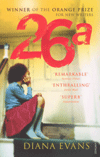
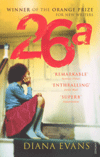
Diana Evans, author of 26a, on the cover of yesterday's LIFE Magazine supplement of The Guardian, Nigeria. She continues her book tour of the country all this week.
****
***
*
My review of 26a...
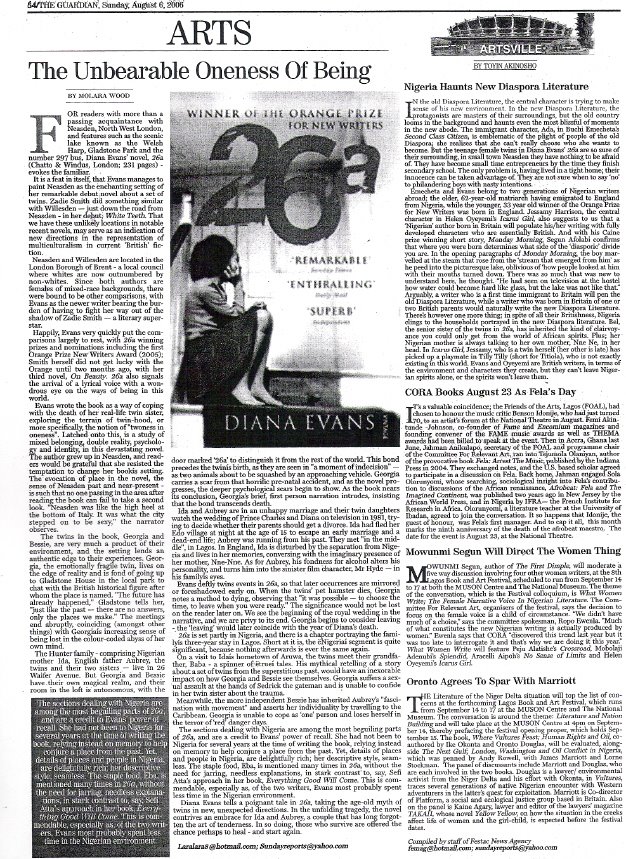
The Unbearable Oneness of Being
By Molara Wood

For readers with more than a passing acquaintance with Neasden, North West London, and features such as the scenic lake known as the Welsh Harp, Gladstone Park and the number 297 bus, Diana Evans’ novel, 26a (Chatto & Windus, London; 231 pages) - evokes the familiar.

It is a feat in itself, that Evans manages to paint Neasden as the enchanting setting of her remarkable debut novel about a set of twins. Zadie Smith did something similar with Willesden - just down the road from Neasden - in her debut, White Teeth. That we have these unlikely locations in notable recent novels, may serve as an indication of new directions in the representation of multiculturalism in current 'British' fiction.

Neasden and Willesden are located in the London Borough of Brent - a local council where whites are now outnumbered by non-whites. Since both authors are females of mixed-race backgrounds, there were bound to be other comparisons, with Evans as the newer writer bearing the burden of having to fight her way out of the shadow of Zadie Smith - a literary superstar. Happily, Evans very quickly put the comparisons largely to rest, with 26a winning prizes and nominations including the first Orange Prize New Writers Award (2005); Smith herself did not get lucky with the Orange until two months ago, with her third novel, On Beauty. 26a also signals the arrival of a lyrical voice with a wondrous eye on the ways of being in this world.

Evans wrote the book as a way of coping with the death of her real-life twin sister, exploring the terrain of twin-hood, or more specifically, the notion of "twoness in oneness". Latched onto this, is a study of mixed belonging, double reality, psychology and identity, in this devastating novel. The author grew up in Neasden, and readers would be grateful that she resisted the temptation to change her book’s setting. The evocation of place in the novel, the sense of Neasden past and near-present - is such that no one passing in the area after reading the book can fail to take a second look. "Neasden was like the high heel at the bottom of Italy. It was what the city stepped on to be sexy," the narrator observes.

The twins in the book, Georgia and Bessie, are very much a product of their environment, and the setting lends an authentic edge to their experiences. Georgia, the emotionally fragile twin, lives on the edge of reality and is fond of going up to Gladstone House in the local park to chat with the British historical figure after whom the place is named. "The future has already happened," Gladstone tells her, "just like the past… there are no answers, only the places we make." The meetings end abruptly, coinciding (amongst other things) with Georgia’s increasing sense of being lost in the colour-coded abyss of her own mind.

The Hunter family - comprising Nigerian mother Ida, English father Aubrey, the twins and their two sisters - live in 26 Waifer Avenue. But Georgia and Bessie have their own magical realm, and their room in the loft is autonomous, with the door marked ‘26a’ to distinguish it from the rest of the world. This bond precedes the twin’s birth, as they are seen in "a moment of indecision" - as two animals about to be squashed by an approaching vehicle. Georgia carries a scar from that horrific pre-natal accident, and as the novel progresses, the deeper psychological scars begin to show. As the book nears its conclusion, Georgia’s brief, first person narration intrudes, insisting that the bond transcends death.
Ida and Aubrey are in an unhappy marriage and their twin daughters watch the wedding of Prince Charles and Diana on television in 1981, trying to decide whether their parents should get a divorce. Ida had fled her Edo village at night at the age of 15 to escape an early marriage and a dead-end life; Aubrey was running from his past. They met "in the middle", in Lagos. In England, Ida is disturbed by the separation from Nigeria and lives in her memories, conversing with the imaginary presence of her mother, Nne-Nne. As for Aubrey, his fondness for alcohol alters his personality, and turns him into the sinister film character, Mr Hyde - in his family’s eyes.

Evans deftly twins events in 26a, so that later occurrences are mirrored or foreshadowed early on. When the twins’ pet hamster dies, Georgia notes a method to dying, observing that "it was possible… to choose the time, to leave when you were ready." The significance would not be lost on the reader later on. We see the beginning of the royal wedding in the narrative, and we are privy to its end. Georgia begins to consider leaving - the ‘leaving’ would later coincide with the year of Diana’s death.

26a is set partly in Nigeria, and there is a chapter portraying the family’s three-year stay in Lagos. Short at it is, the ‘Nigeria’ segment is quite significant, because nothing afterwards is ever the same again. On a visit to Ida’s hometown of Aruwa, the twins meet their grandfather, Baba - a spinner of ‘true’ tales. His mythical retelling of a story about a set of twins from the superstitious past, would have an inexorable impact on how Georgia and Bessie see themselves. Georgia suffers a sexual assault at the hands of Sedrick the gateman and is unable to confide in her twin sister about the trauma. Meanwhile, the more independent Bessie has inherited Aubrey’s "fascination with movement" and asserts her individuality by travelling to the Caribbean. Georgia is unable to cope as ‘one’ person and loses herself in the terror of ‘red’ danger days.

The sections dealing with Nigeria are among the most beguiling parts of 26a, and are a credit to Evans’ power of recall. She had not been to Nigeria for several years at the time of writing the book, relying instead on memory to help conjure a place from the past. Yet, details of places and people in Nigeria, are delightfully rich; her descriptive style, seamless. The staple food, Eba, is mentioned many times in 26a, without the need for jarring, needless explanations, in stark contrast to, say, Sefi Atta’s approach in her book, Everything Good Will Come. This is commendable, especially as, of the two writers, Evans most probably spent less time in the Nigerian environment.

Diana Evans tells a poignant tale in 26a, taking the age-old myth of twins in new, unexpected directions. In the unfolding tragedy, the novel contrives an embrace for Ida and Aubrey, a couple that has long forgotten the art of tenderness. In so doing, those who survive are offered the chance perhaps to heal - and start again.
*Published in The Guardian, Lagos, Nigeria, on Sunday 6th August 2006.

play: the inheritors


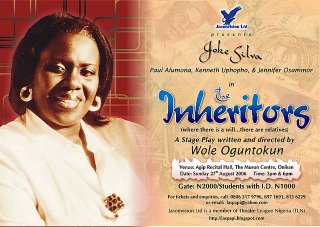
Jasonvision presents The Inheritors- A stage play written and directed by Wole Oguntokun, featuring Joke Silva at the Muson Centre on Sunday the 27th of August 2006 at 3pm and 6pm.

The Inheritors- Where there is a will there are relatives-A tale of greed and reckless ambition. First performed at the Muson Centre on Sunday the 29th of December 2003 starring Taiwo Ajai-Lycett.

Gate: N2000 apiece/ Students with I.D. N1000

Tickets may be obtained by calling 01-897 1691, 01-813 6229, 0806 317 9796 or by sending e-mail to laspapi@yahoo.com .

Poems

D.A.Y - Kole Ade Odutola
Darfur Down - mrp/thepoetryman
Half of a Yellow Sun - By Chiedu Ezeanah
Suffer the Little Children - Mshairi
Facing Kilimanjaro - Tade Ipadeola
Amphitheatre - Molara Wood
Nights - Unoma Azuah
A Tale of Two Summits - Niyi Osundare
Eyewitness - Omolola Ijeoma Ogunyemi
Pharaoh - Emman Usman Shehu
Globetrotter - Amatoritsero Ede
Unbelief - Nnorom Azuonye
Bag Lady - Molara Wood
Anarch of Hubris - Odia Ofeimun
Bayswater - Emman Usman Shehu
Spinner of Dialetics - Chiedu Ezeanah
Cleansing Song - Femi Osofisan
His English is Bad - Toni Kan
The Immigrant - Wole Oguntokun
Talaria - Tade Ipadeola
Lost Seed - Molara Wood

419 squad nominated

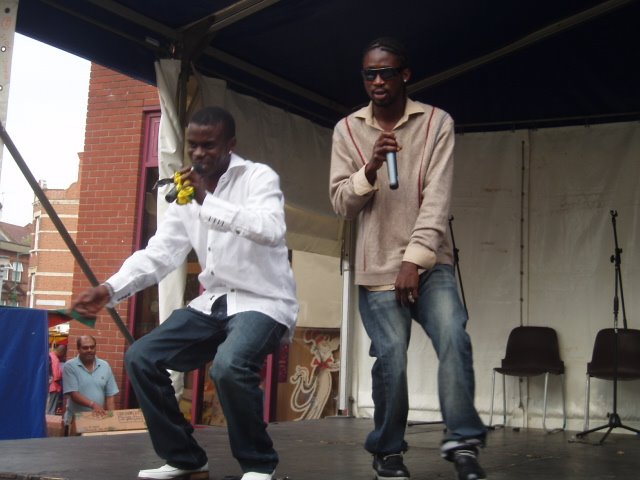
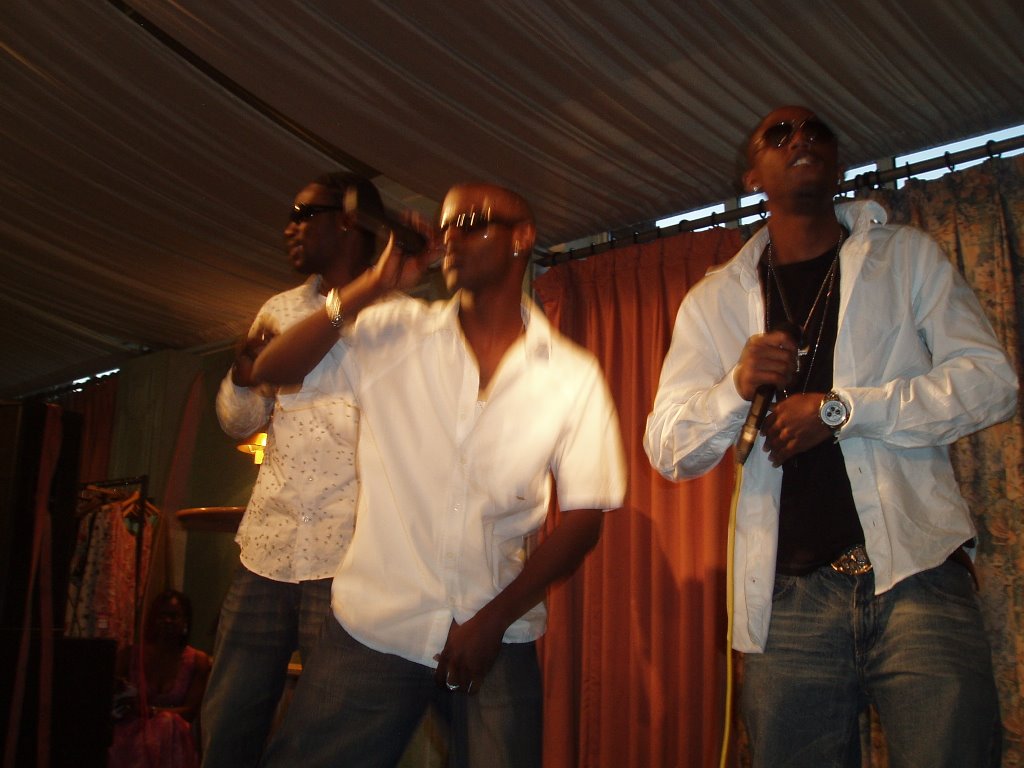
Congratulations to the Naija Hip-Hop group, the 419 Squad who, along with their erstwhile collaborator, JJC - have been nominated in 2 categories in this Year's Nigeria Music Awards. They've received nods for Best Group of the Year & UK Urban Artiste of the Year. You can vote for your favourite acts online. So get voting.
Here's the 419 Squad performing for the kids at the African Showcase Market on 22nd July, Willesden Green Library, London.

*Images by MW

poe: short story classic

The Tell-Tale Heart
Edgar Allan Poe


True! – nervous – very, very dreadfully nervous I had been and am; but why will you say that I am mad? The disease had sharpened my senses – not destroyed – not dulled them. Above all was the sense of hearing acute. I heard all things in the heaven and in the earth. I heard many things in hell. How, then, am I mad? Hearken! and observe how healthily – how calmly I can tell you the whole story.

It is impossible to say how first the idea entered my brain; but once conceived, it haunted me day and night. Object there was none. Passion there was none. I loved the old man. He had never wronged me. He had never given me insult. For his gold I had no desire. I think it was his eye! yes, it was this! He had the eye of a vulture – a pale blue eye, with a film over it. Whenever it fell upon me, my blood ran cold; and so by degrees – very gradually – I made up my mind to take the life of the old man, and thus rid myself of the eye forever.

Now this is the point. You fancy me mad. Madmen know nothing. But you should have seen me. You should have seen how wisely I proceeded – with what caution – with what foresight – with what dissimulation I went to work! I was never kinder to the old man than during the whole week before I killed him. And every night, about midnight, I turned the latch of his door and opened it – oh so gently! And then, when I had made an opening sufficient for my head, I put in a dark lantern, all closed, closed, so that no light shone out, and then I thrust in my head. Oh, you would have laughed to see how cunningly I thrust it in! I moved it slowly – very, very slowly, so that I might not disturb the old man's sleep. It took me an hour to place my whole head within the opening so far that I could see him as he lay upon his bed. Ha! – would a madman have been so wise as this? And then, when my head was well in the room, I undid the lantern cautiously – oh, so cautiously – cautiously (for the hinges creaked) – I undid it just so much that a single thin ray fell upon the vulture eye. And this I did for seven long nights – every night just at midnight – but I found the eye always closed; and so it was impossible to do the work; for it was not the old man who vexed me, but his Evil Eye. And every morning, when the day broke, I went boldly into the chamber, and spoke courageously to him, calling him by name in a hearty tone, and inquiring how he has passed the night. So you see he would have been a very profound old man, indeed, to suspect that every night, just at twelve, I looked in upon him while he slept.

Upon the eighth night I was more than usually cautious in opening the door. A watch's minute hand moves more quickly than did mine. Never before that night had I felt the extent of my own powers – of my sagacity. I could scarcely contain my feelings of triumph. To think that there I was, opening the door, little by little, and he not even to dream of my secret deeds or thoughts. I fairly chuckled at the idea; and perhaps he heard me; for he moved on the bed suddenly, as if startled. Now you may think that I drew back – but no. His room was as black as pitch with the thick darkness, (for the shutters were close fastened, through fear of robbers,) and so I knew that he could not see the opening of the door, and I kept pushing it on steadily, steadily.

I had my head in, and was about to open the lantern, when my thumb slipped upon the tin fastening, and the old man sprang up in bed, crying out – "Who's there?"

I kept quite still and said nothing. For a whole hour I did not move a muscle, and in the meantime I did not hear him lie down. He was still sitting up in the bed listening; – just as I have done, night after night, hearkening to the death watches in the wall.

Presently I heard a slight groan, and I knew it was the groan of mortal terror. It was not a groan of pain or of grief – oh, no! – it was the low stifled sound that arises from the bottom of the soul when overcharged with awe. I knew the sound well. Many a night, just at midnight, when all the world slept, it has welled up from my own bosom, deepening, with its dreadful echo, the terrors that distracted me. I say I knew it well. I knew what the old man felt, and pitied him, although I chuckled at heart. I knew that he had been lying awake ever since the first slight noise, when he had turned in the bed. His fears had been ever since growing upon him. He had been trying to fancy them causeless, but could not. He had been saying to himself – "It is nothing but the wind in the chimney – it is only a mouse crossing the floor," or "It is merely a cricket which has made a single chirp." Yes, he had been trying to comfort himself with these suppositions: but he had found all in vain. All in vain; because Death, in approaching him had stalked with his black shadow before him, and enveloped the victim. And it was the mournful influence of the unperceived shadow that caused him to feel – although he neither saw nor heard – to feel the presence of my head within the room.

When I had waited a long time, very patiently, without hearing him lie down, I resolved to open a little – a very, very little crevice in the lantern. So I opened it – you cannot imagine how stealthily, stealthily – until, at length a single dim ray, like the thread of the spider, shot from out the crevice and fell full upon the vulture eye.
It was open – wide, wide open – and I grew furious as I gazed upon it. I saw it with perfect distinctness – all a dull blue, with a hideous veil over it that chilled the very marrow in my bones; but I could see nothing else of the old man's face or person: for I had directed the ray as if by instinct, precisely upon the damned spot.

And have I not told you that what you mistake for madness is but over acuteness of the senses? – now, I say, there came to my ears a low, dull, quick sound, such as a watch makes when enveloped in cotton. I knew that sound well, too. It was the beating of the old man's heart. It increased my fury, as the beating of a drum stimulates the soldier into courage.
But even yet I refrained and kept still. I scarcely breathed. I held the lantern motionless. I tried how steadily I could maintain the ray upon the eye. Meantime the hellish tattoo of the heart increased. It grew quicker and quicker, and louder and louder every instant. The old man's terror must have been extreme! It grew louder, I say, louder every moment! – do you mark me well? I have told you that I am nervous: so I am. And now at the dead hour of the night, amid the dreadful silence of that old house, so strange a noise as this excited me to uncontrollable terror. Yet, for some minutes longer I refrained and stood still. But the beating grew louder, louder! I thought the heart must burst. And now a new anxiety seized me – the sound would be heard by a neighbor! The old man's hour had come! With a loud yell, I threw open the lantern and leaped into the room. He shrieked once – once only. In an instant I dragged him to the floor, and pulled the heavy bed over him. I then smiled gaily, to find the deed so far done. But, for many minutes, the heart beat on with a muffled sound. This, however, did not vex me; it would not be heard through the wall. At length it ceased. The old man was dead. I removed the bed and examined the corpse. Yes, he was stone, stone dead. I placed my hand upon the heart and held it there many minutes. There was no pulsation. He was stone dead. His eye would trouble me no more.


If still you think me mad, you will think so no longer when I describe the wise precautions I took for the concealment of the body. The night waned, and I worked hastily, but in silence. First of all I dismembered the corpse. I cut off the head and the arms and the legs.

I then took up three planks from the flooring of the chamber, and deposited all between the scantlings. I then replaced the boards so cleverly, so cunningly, that no human eye – not even his – could have detected any thing wrong. There was nothing to wash out – no stain of any kind – no blood-spot whatever. I had been too wary for that. A tub had caught all – ha! ha!

When I had made an end of these labors, it was four o'clock – still dark as midnight. As the bell sounded the hour, there came a knocking at the street door. I went down to open it with a light heart, – for what had I now to fear? There entered three men, who introduced themselves, with perfect suavity, as officers of the police. A shriek had been heard by a neighbor during the night; suspicion of foul play had been aroused; information had been lodged at the police office, and they (the officers) had been deputed to search the premises.

I smiled, – for what had I to fear? I bade the gentlemen welcome. The shriek, I said, was my own in a dream. The old man, I mentioned, was absent in the country. I took my visitors all over the house. I bade them search – search well. I led them, at length, to his chamber. I showed them his treasures, secure, undisturbed. In the enthusiasm of my confidence, I brought chairs into the room, and desired them here to rest from their fatigues, while I myself, in the wild audacity of my perfect triumph, placed my own seat upon the very spot beneath which reposed the corpse of the victim.

The officers were satisfied. My manner had convinced them. I was singularly at ease. They sat, and while I answered cheerily, they chatted of familiar things. But, ere long, I felt myself getting pale and wished them gone. My head ached, and I fancied a ringing in my ears: but still they sat and still chatted. The ringing became more distinct: – it continued and became more distinct: I talked more freely to get rid of the feeling: but it continued and gained definiteness – until, at length, I found that the noise was not within my ears.

No doubt I now grew very pale; – but I talked more fluently, and with a heightened voice. Yet the sound increased – and what could I do? It was a low, dull, quick sound – much such a sound as a watch makes when enveloped in cotton. I gasped for breath – and yet the officers heard it not. I talked more quickly – more vehemently; but the noise steadily increased. I arose and argued about trifles, in a high key and with violent gesticulations; but the noise steadily increased. Why would they not be gone? I paced the floor to and fro with heavy strides, as if excited to fury by the observations of the men – but the noise steadily increased. Oh God! what could I do? I foamed – I raved – I swore! I swung the chair upon which I had been sitting, and grated it upon the boards, but the noise arose over all and continually increased. It grew louder – louder – louder! And still the men chatted pleasantly, and smiled. Was it possible they heard not? Almighty God! – no, no! They heard! – they suspected! – they knew! – they were making a mockery of my horror! – this I thought, and this I think. But anything was better than this agony! Anything was more tolerable than this derision! I could bear those hypocritical smiles no longer! I felt that I must scream or die! – and now – again! – hark! louder! louder! louder! louder! –

"Villains!" I shrieked, "dissemble no more! I admit the deed! – tear up the planks! – here, here! – it is the beating of his hideous heart!"

***

*The Tell-Tale Heart was first published in 1843 by Edgar Allan Poe (1809-1849), an early master of the short story. The Tell-Tale Heart is out of copyright. A printer-friendly pdf version of the story can be downloaded on Litro.

ana abuja august reading

ANA ABUJA
SPECIAL AUGUST READING

The Association of Nigerian Authors (ANA), Abuja Chapter, announces its special August reading session.

The Guest Writer for the event is Bello Musa Dankano, a Federal Civil Servant and author of A Season of Locusts, Petrol Station, My Cousins and I, and The Last Caravan and Other Short Stories.

All lovers of the literary arts are invited to this event which takes place at Reiz Continental Hotel, behind Nicon Insurance Plaza and adjacent to the National Library, Central Area, Abuja.

Date: Thursday, August 31, 2006
Time: 5:00pm


Contact the Secretary (08027433095) or Jerry (08052771123) for any of the Dankano books.


Uduakobong Kanico
Secretary

Sunday, July 30, 2006

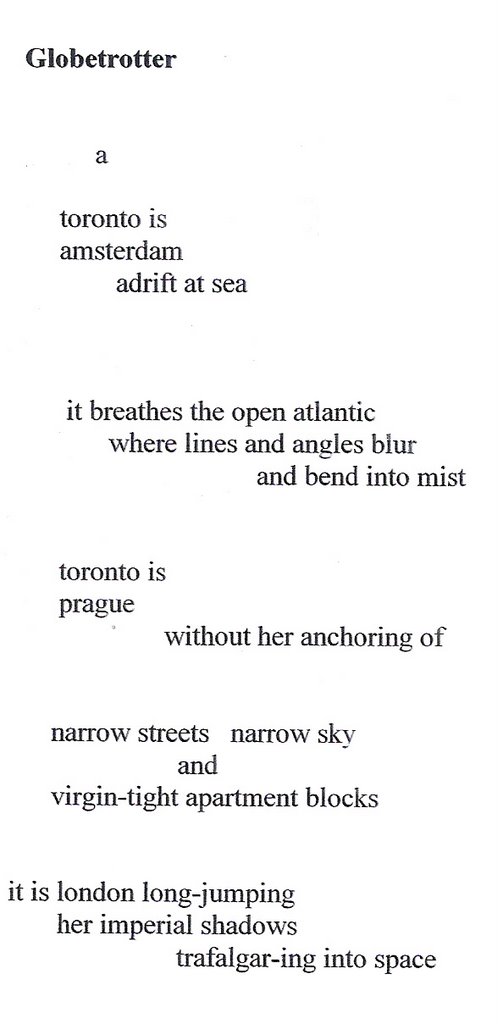
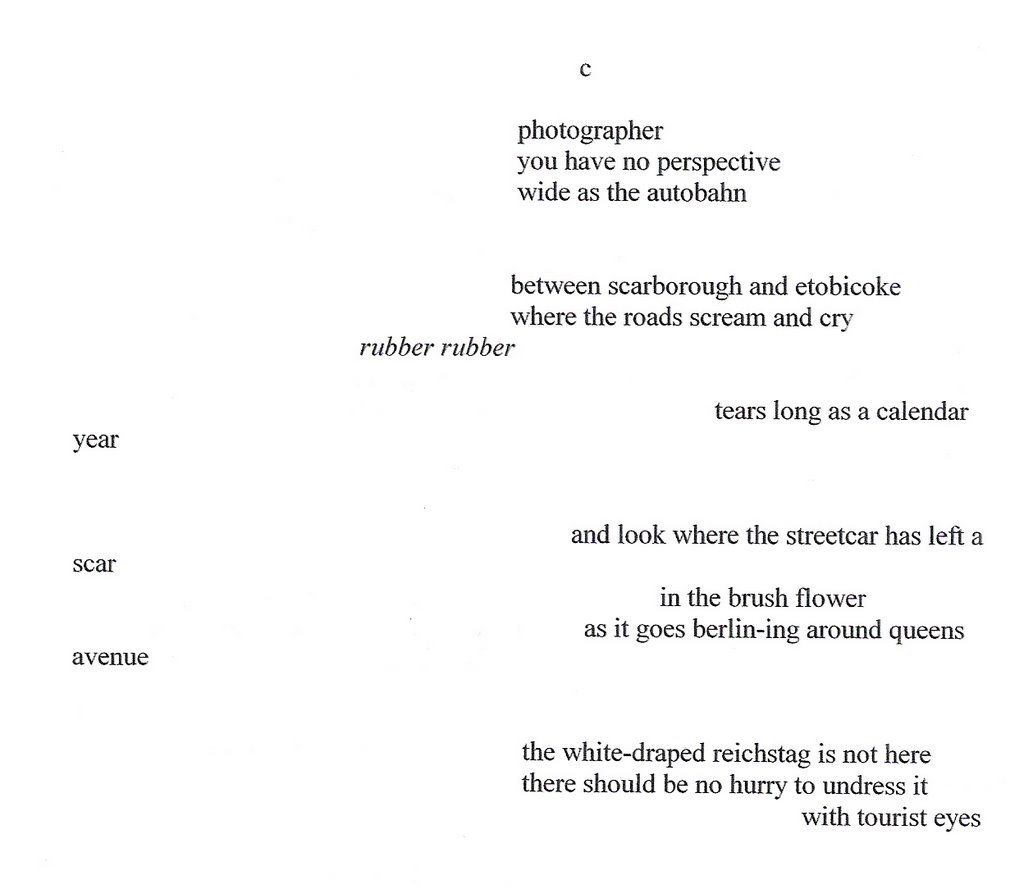
globetrotter - a poem


© Amatoritsero Ede

*taken from TOK: Writing the New Toronto Helen Walsh ed. (Toronto: Zephyr Press, 2006)

*Reproduced with permission.
**Image: courtesy of the artist

diana evans tours nigeria

Diana omo Evans tours Nigeria

Diana omo Evans won last year's inaugural £10,000 Orange Prize for New Writers with her debut novel about a set of twins, 26a.

Set in Nigeria & the UK, 26a also won a Betty Trask award & Decibel Award, receiving a nomination for the Guardian First Book Award.

Book lovers in Nigeria can catch up with the author on these dates...

Saturday 5 August @ Jazzhole, Awolowo Road, Ikoyi - Lagos 7-9pm

Wed 9 August @ British Council, 10 Emir's Palace Road, Kano - 6 - 8pm

Thursday 10 August @ British Council, Plot 2935, IBB Way, Maitama, Abuja - 6 - 8pm

Friday 11 August @ Signature Gallery (Abuja Literary Society), Ademola Adetokunbo Crescent, Abuja - 6:30 - 9:00pm

Saturday 12 August @ The Media Store, Silverbird Galleria (in partnership with ABC Bookclub), Victoria Island, Lagos - 4-6pm

All events are free.

Further info at Cassava Republic

*Author's Image by MW; taken 17 April 2005, South Bank, London.

globetrotter - contd

© Amatoritsero Ede
*taken from TOK: Writing the New Toronto Helen Walsh ed. (Toronto: Zephyr Press, 2006)
*Reproduced with permission

poetsletter

I smiled when I received a text message from a poet friend, congratulating me on my first 'cover'. My friend's just proud, I guess, as I share the cover of the 1st Poet's Letter print mag with 11 other poets.

The magazine launches @ the London Poetry Festival, Wednesday 23rd of August - RADA, London @ 6.30pm.

For more info, please visit the Poet's Letter website.

ngugi in london

Ngugi wa Thiong'o... Wizard of the Crow

One of Africa's greatest writers, exiled from Kenya for 22 years because of his highly political and acclaimed work including the bestselling novel Petals of Blood, Ngugi returns with his first novel in 20 years, Wizard of the Crow. Set in a fictional modern African state, it is a magisterial, acerbic and humorous landmark of post-colonial literature. Ngugi will be discussing his life and his work with journalist Maya Jaggi.
Date: Thurday 10 August 2006
Time: 7pm
Venue: 7pm, doors open at 6.30pm Congress Hall, Congress Centre, 28 Great Russell Street, London, WC1B 3LS
Info & ticket information: Foyles

lagos ana

Lagos Writers Celebrate Patron's Day

The annual Patron’s Day of Association of Nigerian Authors, Lagos Branch (ANALagos) holds on Saturday, August 12, 2006. The Patron’s Day is a day set aside by creative writers resident in Lagos, under the umbrella of ANA Lagos, for thecelebration of the few big-hearted individuals and organisations that have made meaningful contributions towards the advancement of Literature, and the Association.

This year’s edition is quite special, as reflected in its highlights, which include the formal investiture of Chief Chris Ojomo as Patron of the Branch.Chief Ojomo is an engineer who has proved himself very intellectual, creative and assiduous. He is expected to be the second active Patron of the Branch; whose only committed Patron, up till now, is Mr Tayo Aderinokun, MD, GuarantyTrust Bank PLC.

The other highlights of the special event include poetry performances, readingsfrom creative works of new and established writers, and a special presentationof a thrilling play entitled OUR LANDLORD, written by Osaletin Sylvester Isekhaigbe, directed and performed byOnileagbon Theatre Troupe.

Venue: National Gallery of Art (Aina Onabolu Complex), National Theatre, Iganmu, Lagos

Time: 1.00pm Prompt.

While authors and publishers are advised to bring their publications forexhibition and sale at the get-together which our new patron has promised tohost, we’d like to implore all ANA Lagos members who are yet to formalize orupdate their membership, to pay up on or before the event.

New ANA Lagos Secretariat
This is to remind all members of the creative community that the Secretariat ofANA Lagos has been moved from 9, Eric Moore Close, Surulere, to 31, Shomade Crescent, (Babajide Bus Stop), Off Alhaju Masha Street, Shitta, Surulere.

Thanks.

Folu Agoi
08037257165
Chairman, ANA Lagos

ede... more poetry

Reproduced with permission

africa centre closes

Press Release

Africa Centre, London, closes for refurbishment

In line with plans for the redevelopment of the Africa Centre, with effect from the end of July, all routine activity inside the building will cease while a series of site investigations take place and architectural plans are completed.

The purpose of the redevelopment process – enabled by a new funding dispensation from Arts Council England – is to guarantee that the institution’s main facilities can effectively serve the Centre’s mission as a flagship Arts Centre in Europe, and at the same time provide income that will ensure sustainability. Recent financial difficulties have led to the deterioration of the Centre’s Covent Garden building, hindering the full and effective use of the facilities and affecting programming.

Since being launched in 1964, the Centre has played an important role in projecting a positive face of Africa in London, and providing a focal point for all forms of cultural and social activities related to Africa, through meetings, exhibitions and performance arts.

The Council of Management, reconstituted in 2004 with a new Chair and found by the Charities Commission report of May 2005 to be "capable of effective management to take the charity forward", is determined that this role should be continued in the future, free from the uncertainties of the past twenty years.

The redevelopment process will take between 18 months and three years. During this period, Africa Centre activities, including ‘Talking Africa’, its radio programme, and ‘Africa Visions’, the annual literature programme and tour, will continue, while other projects will be developed as part of the process of charting the Centre’s future programming vision.

The Council is committed to keeping all its various stakeholders informed of developments at the Centre, and will be issuing updates on a regular basis. It would also like to assert in the strongest terms possible that there is no intention to close down or sell off the building. The Council is fully committed to retaining and developing the King Street site, which has been one of the main strengths of the Centre in its forty-year history, and offers an unrivalled shop window for Africa in central London.

Council of Management of the Africa Centre

For more information, please contact: Oliver Tunde Andrews, Chair, Council of Management, The Africa Centre, tel: 020-7836-1973; or e-mail oliver.andrews@dsl.pipex.com

Monday, July 24, 2006

habila

Still on Caine Prize related matters, here's an excerpt from Love Poems, for which Helon Habila became the 1st Nigeria to win the award, back in 2001...

But it was Lomba's bowdlerization of Sappho's 'Ode' that brought the superintendent to the cell door:

A peer of goddesses she seems to me
The lady who sits over against me
Face to face,
Listening to the sweet tones of my voice,
And the loveliness of my laughing.
It is this that sets my heart fluttering
In my chest,
For if I gaze on you but for a little while
I am no longer master of my voice,
And my tongue lies useless
And a delicate flame runs over my skin
No more do I see with my eyes;
The sweat pours down me
I am all seized with trembling
And I grow paler than the grass
My strength fails me
And I seem little short of dying.


Read Love Poems online...

caine prize 2006


Darrel Bristow-Bovey - the other South African on the Caine shortlist & the only man - was in the running for his dialogue-driven short story on Johannesburg's criminal underbelly, A Joburg Story.


Kenyan writer Muthoni Garland signs an autograph at the South Bank reading. Garland was short-listed for her story, Tracking the Scent of My Mother.


Academic & literary translator, Wangui wa Goro (left) poses with writer, Laila Lalami, author of Hopes and Other Dangerous Pursuits. A Moroccan, Lalami manages the literary blog Moorish Girl. She was short-listed for her short story, The Fanatic.


Here posing with Kadija George (left) is Nigerian Sefi Atta who made the short-list for her short story, The Last Trip. Atta is the author of the novel, Everything Good Will Come. Kadija George organised Atta readings in the UK in 2005.

*Photos: taken @ the South Bank Centre, London, on 11 July 2006 (c) MW

mary watson, caine winner

Left is Mary Watson, winner of the Caine Prize 2006, photographed at the South Bank Centre, London on 11 July.

Watson, a South African, won the prize for Jungfrau. The story is taken from her collection of short stories, Moss (Kwela Books).

My report on the reading is available online - for a week.

*******
Others at the reading, Ebun Olatoye of True Love (W. Africa) magazine, poses (right) with short-listed Darrel Bristow-Bovey.

Writer Ike Anya is also shown with literary activist Kadija George. "But I'm not famous!" George demurred when I was about to photograph her. "A lot of people are famous because of your efforts," I told her.


Images: MW

ojaide: truth or hokum?

A recent interview given by the poet, Tanure Ojaide, has got Nigeria's so called 'younger writers' in a proper huff. Ojaide had much to say about his work, and the country's poetic production in the main, but it is what said about the '3rd or 4th generation' of Nigerian writers that is in contention. In short, Ojaide declares that:

"There’s still no new generation you can identify in Nigerian poetry now."

There have been many responses to Ojaide's views on the younger poets, including this one, by Obi Nwakanma:

TANURE Ojaide’s “bombshell”.... turned out to be quite a whimper. The poet neither provided new, thoughtful insight into the nature of writing, nor did he advance a vital, compelling examination of the social issues around Nigerian literary culture particularly, or its unique expression within the tense intermingling that frames literary production in every era, and how that is shaping critical response to Nigerian literature in the larger backdrop of developments across cultures and within new currents.

What came out of the Ojaide interview is a rather glib statement, in which Ojaide dismissed new Nigerian writers as “copycats.” For a poet, that is a very drab worldview. Tanure Ojaide was responding to a statement made by Akachi Ezeigbo about a “fourth generation” of Nigerian writers. Ojaide’s answer needs reproduction here: “I still believe” he said “there is no new generation yet…when you look at Wumi Raji, he’s basically Niyi Osundare. When you look at Akeem Lasisi, he’s basically Niyi Osundare. There are some poets I read they write after my poems. This is to say they haven’t got a voice of their own. We shouldn’t deceive ourselves. There is still no new generation you can identify in Nigerian poetry now.”

Ojaide further says: “if you place my latest collections, maybe, Water Passion and Oil Remedies or House of Words, side by side with what the new poets are writing, you can hardly see any generation gap as you can see between us and the Soyinka generation. So, I think our generation continues - what I call the New African Poetry. It’s too late for anybody to separate them. I’ve read Maik Nwosu, Ogaga Ifowodo and others, and I haven’t seen any difference yet.” And this in fact is the crux for me. Ojaide’s does not even know the generation he’s describing. I suppose he meant Remi Raji, of whom he ascribes an Osundare influence but that is a small matter. In the broader contest of national poetry, there are often continuities.

Read Nwakanma's piece...

music for the off key


Peepal Tree Press & Courttia Newland invite you to the launch party to celebrate the publication of

Music for the Off-Key

on Monday 31 July at Inn on The Green, 3-5 Thorpe Close, Portobello Green, Ladbroke Grove, London W10 5XL Tel: 020 8962 5757
7.30pm – midnight

Music and spoken word performances, deejay and drinks

RSVP: kadija@peepaltreepress.com
tel: 0113 2451703 / text 07890 269138

“A long-awaited collection from an outstanding storyteller, Music for the Off-Key is a memorable celebration of the surreal nature of everyday life.”
– Andrea Enisuoh, New Nation

Music for the Off-Key COURTTIA NEWLAND
ISBN:1-84523-040-X
published 1st August by Peepal Tree Press.
Peepal Tree Press 17 King's Avenue, Leeds LS6 1QS, United Kingdom
Telephone +44 (0)113 2451703

achebe colloquium

Press Release

Achebe Colloquium
In Celebration of Nigerian Excellence

July 14th, 2006
After nearly 18 months, the Chinua Achebe Foundation is about to conclude its ambitious Interview project of conversations with Nigeria’s elder statesmen and women. The final interviews will be published shortly and the entire project will be concluded with an elaborate conversation with Professor Chinua Achebe. This month, the Foundation will turn to a generation of future leaders within Nigeria and the Diaspora, whose life and work offer the hope of solutions to thegrave issues raised by our elders.

In a 5 part series of rigorous intellectual discussions with renowned experts, The Achebe Colloquium will showcase profiles and roundtable discussions of world-class professionals in myriad fields, bringing to the fore levels of excellence and achievement in the younger generation that most Nigerians are not even aware of.

The first Colloquium – Science and Medicine - will be serialized in several media next week. The entire project will be conducted in a manner accessible to the majority of Nigerians and other interested persons around the globe.

We invite our brilliant youth to join us as we ponder our collective future together.

Sincerely,
Chinua Achebe Foundation Media Office

8th lagos book & art festival

We write to invite you to the 8th edition of the Lagos Book and Art Festival.

The Festival is an initiative aimed at helping totransform this country's teeming population into true human capital. It has been a major, fixed activity in the arts and culture calendar of Lagos City. Over 25,000 people participated at the Festivalat the same venue last year.

The Committee For Relevant Art (CORA), which organises the Festival, is a 15-year-old club of culture enthusiasts, with the mandate to do all it can, legally, to help boost the scope of appreciation ofall the contemporary arts of Nigeria.

What Does The Book and Art Festival Look Like?

This event is set up in a carnivalesque way to attract families and a public that seeks entertainment. All the last seven editions have been filled with fun and thrills, with a full band performing, galleries displaying art, theatre performances, and a series of art, craft, textile, dancing workshops focused on kids happening all over the open field. The festival features scores of book stands, symposiums on literature and book parties. There are at least four drama skits and full theatre productions on the festival grounds throughout the three-day duration of the Festival. The idea is to make 'The Book' have mass appeal. Ours is not a Book Fair. It's the city's prime culture picnic, an arts festival with a high Book content.

The 8th Book and Art Festival is expected to be opened by Professor Ayo Banjo, former Vice Chancellor of the University of Ibadan. The event's annual book talk, 'My Encounter with the Book', will be delivered byPat Utomi, professor of the social environment of business at the Lagos Business School. There's live music by a cast of highlife and Afrobeat bands, featuring Y. S. Akinnibosun and His Classic Band, Seyi Solagbade and The Black Face, Fatai Rolling Dollar and a host of other music stars.

The intellectual 'core' of the Festival is the symposium that features Book Reviews and a discussion around the infrastructure of reading. This year's colloquium will focus on the female narrative voice in Nigerian literature. A review of four books, including Peju Alatise's Crossroads, Helen Oyeyemi's The Icarus Girl, Mobolaji Adenubi's Splendid and Aracelli Aipoh's No Sense Of Limits will involve a panel of literary scholars and amateur book lovers in a conversation with the four female authors at the Muson Centre.

A full day of the Festival is dedicated to landmark birthday anniversary of four special people; ProfessorBiodun Jeyifo, who turned 60 in January, Professor PatUtomi, who turned 50 in March, Steve Rhodes, who turned 80 in April, Professor Femi Osofisan, who turned 60 in June and Benson Idonije, who turned 70 in June. The play, Moremi (Revised Standard Version), has been pencilled for performance on the second day of the Festival.

We thank you for doing what you do and for your beliefin the possibilities of this country.

Very truly yours,
Toyin Akinosho
Secretary General

Jahman Anikulapo
Programme Chair

Monday, July 17, 2006

unbelief, a poem

Unbelief

I remember a dream lost
Like a fable cast
In a passing wind.
I remember a premature victory
Cry, now uncried,
Since the quintessence we were
Of lifelong companionship
Has made me a liar.
Now I take it all back
The many years I lived a fool
Boasting to every ear
That what we shared
Defied even the gods.

© Nnorom Azuonye

* Unbelief is reproduced with permission

after lapofest

This year's LAPOFEST took place over 2 days earlier this month (7 & 8 July).

Keynote speaker, poet & professor of literature, Niyi Osundare, addresses the festival audience.

Here, Osundare shares a joke or two with participants. Folu Agoi, Chairman of ANA Lagos, is 2nd from right.

Excerpt from Folu Agoi's vote of thanks...
On behalf of all members of the literary community inLagos, under the aegis of Association of NigerianAuthors, Lagos Branch, I’d like to thank allindividuals and institutions whose wonderfulcontributions led to the success of the annual LagosPoetry Festival (LAPOFEST) 2006, held on Friday, July7, 2006 and Saturday, July 8, 2006 at MBA Auditorium,Lagos State University (LASU), Ojo, and NationalGallery of Art (Aina Onabolu Complex), National Theatre, Iganmu.

The first class of these great contributors are Prof. Niyi Osundare, who, besides giving the Keynote Address, witnessed every moment of the 2-day carnival;and other Special Guests who also participated fully in the event, including Prof Akachi Ezeigbo, whothrilled the audience at MBA Auditorium, LASU with her exciting recitation; Prof Steve Okecha, more renowned as a chemist and environmentalist; Dr Shambhavi Gopalkrishna of Political Science Department,University of Lagos, who treated the audience to her stirring poetry; Lari Williams, who read copiously from his latest collection of poems entitled, Heartlines on Drumcall; Odia Ofeimun, who gave an electrifying speech, spiced up with some of his oldexhilarating poems; Dr Promise Okekwe, the all-round artist who gave a stimulating speech at the event;Tunji Sotimirin, MC of the event; and the literaryduo, Ebika Anthony (Chairman, Oyo State Branch of Association of Nigerian Authors, ANA Oyo) KunleOkesipe (General Secretary, Centre for Poets).

*Photos: Courtesy of ANA Lagos.

2nd olaudah equiano prize

Press Release

Iroko Productions LLC announces call for entries for the 2nd Annual
Olaudah Equiano Fiction Prize

July 10, 2006, Bay Shore, New York: Iroko Productions LLC today
announces calls for entries for the second annual Olaudah Equiano
Fiction Prize.

The $1000 prize is open to Africans living abroad. It is for an
unpublished short story of 3000 to 5000 words that centers on the
experiences of Africans abroad.

Entries for the second edition of the prize will be accepted from
July 10, 2006 until September 30, 2006. Shortlisted candidates will
be announced November 30, 2006. The winners will be announced on
December 24, 2006.

All stories submitted for the first two years of the competition
will be considered for publication in an anthology of short fiction
devoted to new voices of Africans abroad slated for publication in
the spring of 2007.

The judges for this year's competition are Okey Ndibe of Simon's
Rock College of Bard, Great Barrington, Massachusetts, Wale
Adebanwi, a Bill and Melinda Gates Scholar at the Cambridge
University, England, and Obiwu, Director, The Writing Center,
Central State University, Wilberforce, Ohio.

According to Rudolf Ogoo Okonkwo, the CEO of Iroko Productions
LLC, "The first response to Equiano Prize was excellent. This year,
we intend to take the competition to a new height so that by next
year an elegant award ceremony will become part of the event."

Last year's prize was won by Chielozona Eze, an assistant professor
of postcolonial and Anglophone African literature at Northeastern
Illinois University for his short story, "Lessons in German."
The second prize went to Anietie Isong for his story, "How Great
Thou Art
." The $300 2nd prize is endowed by Dr. Chuma Osakwe in the
memory of his late father, Chief S. B. C Osakwe.

The 3rd prize of $100 went to Chika Unigwe for her story, "Confetti,
Glitter, and Ash."


Iroko Productions LLC is the publisher of Children of A Retired God
by Rudolf Ogoo Okonkwo. Production works on the film The Last
African Virgin is slated to start in the spring of 2007.

For detailed guideline on Equiano Prize, please visit
www.equianoprize.blogspot.com

Contact Information: Rudolf Ogoo Okonkwo
Email: Rudolf@...
Phone: 617-697-1733

tok - anthology

Amatoritsero Ede, award winning poet and author of Collected Poems: A Writer’s Pains & Caribbean Blues (Bremen, Germany: Yeti Press, 1998) - is included in a new anthology, TOK: Writing the New Toronto Book 1. TOK features short fiction and poetry set in Toronto, which brings to life the sights and sounds, taste and smell, of the city through the eyes of its culturally diverse writers.

Ede is writer-in-residence at Carleton University in Canada and is editor of the Sentinel Poetry online. TOK is available to order online.

events

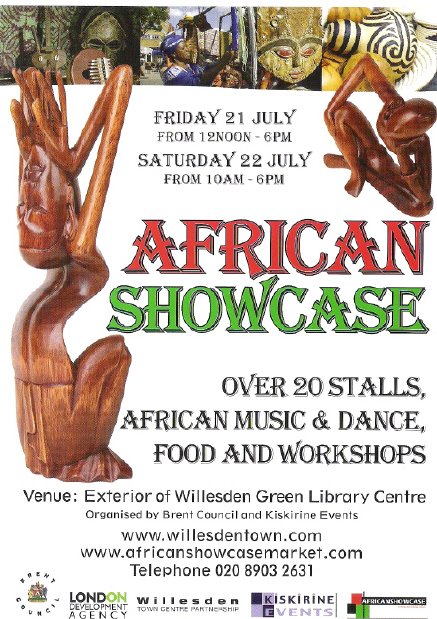
African Showcase
Friday 21 July from 12 - 6pm;
Saturday 22 July from 10am - 6pm
@ the Willesden Green Library Centre
London NW10
Over 20 stalls plus, music & dance, food & workshops.
***
African Writers Evening
Friday July 21, 2006; Start Time: 7.30pm

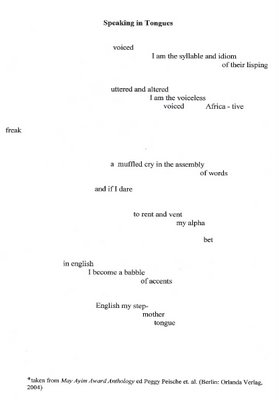
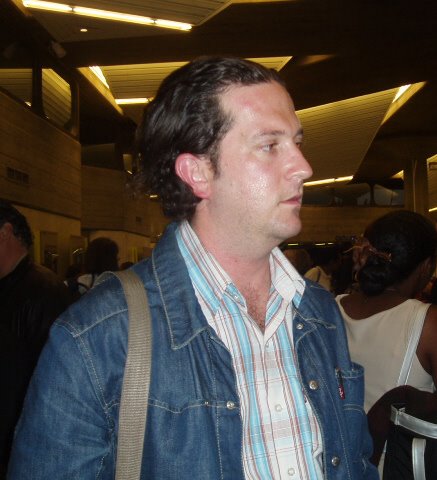
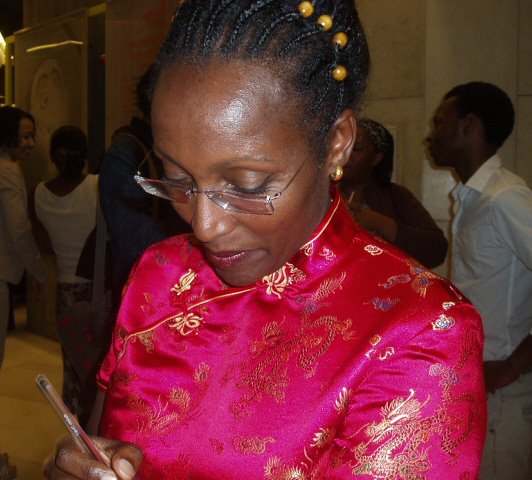
The African Writers' Evening welcomes Hisham Matar (Libya) back after the successful sale of his first manuscript to Penguin (Viking) and subsequent publication of In The Country of Men. He will be joined by the poet Jessica Mkakyera Horn (Uganda) reading from her recently completed manuscript, Speaking in Tongues, which will be released later in the year. Hosted as always by Nii Ayikwei Parkes.
Venue: 22 Betterton Street, Covent Garden, London WC2
entry: £4 / to reservations: events [at] x-bout [dot] com

okigbo conference - call for papers

INTERNATIONAL CONFERENCE ON THE LIFE & POETRY OF CHRISTOPHER OKIGBO, 1932-67
Theme:
Postcolonial African Literature and the Ideals of the Open Society/Teaching and Learning from Christopher Okigbo’s Poetry

CALL FOR PAPERS

It is with great pleasure that we write to invite you to participate in the first international conference on the life and poetry of of Africa’s leading 20th century poet, Christopher Ifekandu Okigbo. Co-hosted by Boston University, Harvard University, University of Massachusetts Boston and Wellesley College, the conference is scheduled for September 20-23, in Cambridge and Boston, Massachusetts, USA, as part of the worldwide celebration of the poet’s legacy on the occasion of the 75th anniversary of his birth and 40th anniversary of his death.

As a specialist on Okigbo’s poetry, it is our hope that you will be able to present a paper at the conference. Each paper is expected to explore any aspect of the conference theme (above) with reference to Okigbo’s poetry sequencesFour Canzones, Heavensgate, Siren Limits, Fragments out of the Deluge, Laments of the Silent Sisters, Lament of the Drums, Distances, Lament of the Masks, Dance of the Painted Maidens or Path of Thunder. Contributors may focus on the poet’s representation of the ideals of the open society in one or more specific sequences. Alternative topics for inquiry include the global contexts and influences on Okigbo's work, intimacy and freedoms of _expression, interracial and intercultural exchange, syncretistic ritual, the enigma of cultural origins, etc. as represented in his poetry and life as a whole.

As far as possible, contributions should include a brief summary of the state of Okigbo criticism and a critical examination of the challenges of teaching and learning from the poetry, as they pertain to the topic examined. Titles and 250-word abstracts of proposed papers should be sent not later than January 31, 2007, to Professor Chukwuma Azuonye, Chair, 2007 Okigbo Conference, Africana Studies Department, University of Massachusetts at Boston, 100 Morrissey Boulevard, Boston, MA, 02186-4310, or by e-mail to Chukwuma.Azuonye@umb.edu.

The conference (whose varied sessions will hold on the campuses of the hosting colleges) promises to bring together an extraordinary diversity of scholars, writers, artists and public intellectuals united by their common interest in the socially transformational power of Okigbo’s poetic vision. Featured keynote speakers include Chinua Achebe, Wole Soyinka, Molara Ogundipe, Ali Mazrui, and Ben Obumselu, and leading Okigbo scholars from across the world, notably Romanus Egudu, Robert Fraser, Uzoma Esonwanne, Gerald Moore, Paul Theroux, Ulli Beier, Dubem Okafor, Dan Izevbaye, Isidore Okpewho, David Richards, and Michael Echeruo.

Preceding the conference will be an exhibition of drawings and paintings inspired by Okigbo’s poetry (beginning from August 18) and a workshop for high school teachers featuring Okigbo’s poetry alongside Chinua Achebe’s Things Fall Apart and Chimamanda Adichie’s Purple Hibiscus. The art exhibition, scheduled for Boston University, will feature such leading artists as Uche Okeke and Obiora Udechukwu alongside Okigbo’s daughter, Obiageli Okigbo. The teachers’ workshop targeted at promoting diversity and multiculturalism in high school literature and social studies curricula will draw together over 100 teachers who are expected to introduce Okigbo and other African writers into their classrooms.

One of the major highlights of the conference is the first ever joint appearance on a public forum of the two women closest to Okigbo’s heart—his wife, Safinat (Judith Sefi Attah) and daughter, Ibrahimat (Obiageli Okigbo). Other highlights include: poetry reading by vintage coterie of contemporary African poets (including Gabriel Okara, J. P. Clark, Niyi Osundare, Tanure Ojaide, Funso Aiyejena, Ifi Amadiume), dramatized reading of Okigbo’s Dance of the Painted Maidens, two films inspired by Okigbo’s poetry (Branwen Okpako’s The Pilot and the Messenger or Who Killed Christopher Okigbo, and Toyin Adepoju’s Meditations on Labyrinths, and round-tables reenacting all the major connections in the poet’s life (Ibadan, Fiditi, Lagos, Nsukka, Makerere). There will be forums for launching new books by and about Okigbo as well as for the Christopher Okigbo Foundation and the Christopher Okigbo Society.

The conference will conclude with a gala nite featuring the highlife music of the late fifties and early sixties.
For further details, please visit the conference website


Chukwuma Azuonye, PhD
Convener, 2007 Christopher Okigbo Conference,
Professor of African Literature
University of Massachusetts at Boston
100 Morrissey Boulevard
Boston, MA 02125-3393
617-287-6795 (Telephone)
617-287-6797 (Telefax)
chukwuma.azuonye@umb.edu

NOTE: Potential participants should please note that it has been established beyond all reasonable doubt and with reference to surviving close relatives of the poet (his brothers, sisters, wife, and daughter) and his close personal friends (Chinua Achebe, Vincent Ike, and Ben Obumselu, among others), that Okigbo’s middle name is Ifekandu NOT Ifeanyichukwu. His brother, the later Dr Pius Okigbo, to whom he dedicated his first book, Heavensgate (1962) and with who he was very close, writes in his 1994 toast (reprinted in Critical Essays on Christopher Okigbo, ed. Uzoma Esonwanne, 2004), “His parents named him Ifekandu, ‘greater than life”; they baptized him Christopher, the name he wore to his grave.” In addition to Christopher, Okigbo was given another English name, Nixton (see Ben Obumselu, Christopher Okigbo: A Poet’s Identity,” in The Responsible Critic, ed. Isidore Diala, 2006). Thus, his full name is Christopher Nixton Ifekandu Okigbo.

the 419 squad


Here's the Hip Hop crew, The 419 Squad providing the entertainment at Fusion, a fashion show featuring the designs of Toyin Ladejobi of TL Couture - in London.

ana oyo - july 29

Association of Nigerian Authors
ANA Oyo State Chapter

cordially invites you

to its LiterarySUNSHINE

LiterarySUNSHINE is comprised of readings, performance, interactions, jokes, food & drinks etc.

Guest Writer: Tope Fakayode (Novelist & Language Instructor)

Host: Hon. Jelili Adeleke ( Member, Oyo State House of Assembly)

Venue: Educare Trust Exhibition Centre, Goshen Superstores Building, beside Coca-Cola, Sango, Ibadan.

Date: Saturday July 29, 2006 Time: 4: 00 P.M

RSVP

Ebika Anthony
Chairman
08034822937

poetry potter is back - july 29

Kowry Kreations Media
shell of creativity
Presents

Venue: National Library Hall, Opposite Casino Cinema, Alagomeji
Yaba, Lagos.

Date: Every last Saturday of the month (July 29th, 2006)
Time: 4 p.m. prompt. No African time, please.

Admission: Free, Free; Free!
Guest Artiste: Akeem Lasisi, The winner ANA-Cadbury Poetry Prize 2005.
The founder of minus poetry, Wale Ajakaye, will sing
Ijala to the delight of everyone and Are, a musician of substance
Also will thrill the audience with his unique music.

Dress Code: Endeavour to come in your native attire.
R.S.V.P: Aderemi Adegbite 08035149337, Ropo Ewenla 08032311574, Lekan Balogun 08027727751
ALL LOVERS OF LITERARY EXISTENCE ARE INVITED

Sunday, July 09, 2006

footie fever


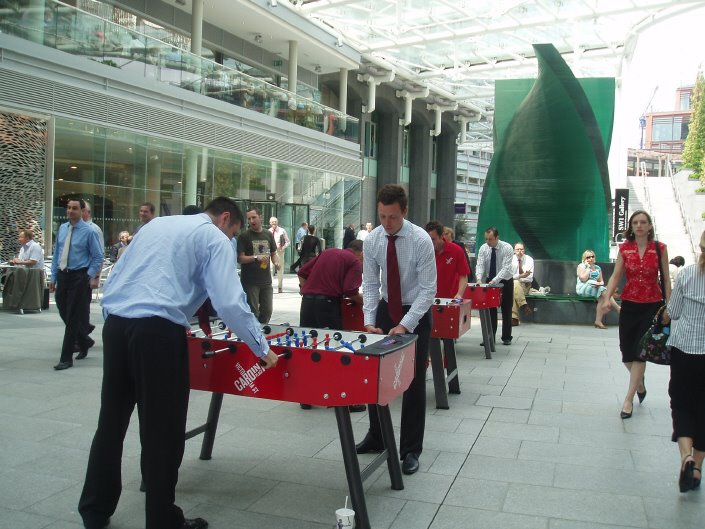
Commemorating today's World Cup finals in my own little way - these pictures were taken in Cardinal Place, London SW, in the height of England's footie fever. The football tables surfaced every lunchtime and it was sheer fun watching all the 'suits' unwinding during their breaks from office work and having a go at trying to win, their ties flying on the breeze.


Check out this lady, she's so into it that she's had to take her shoes off. The footie tables were very popular for a while, then they suddenly disappeared, round about the time England got knocked out of the tournament.

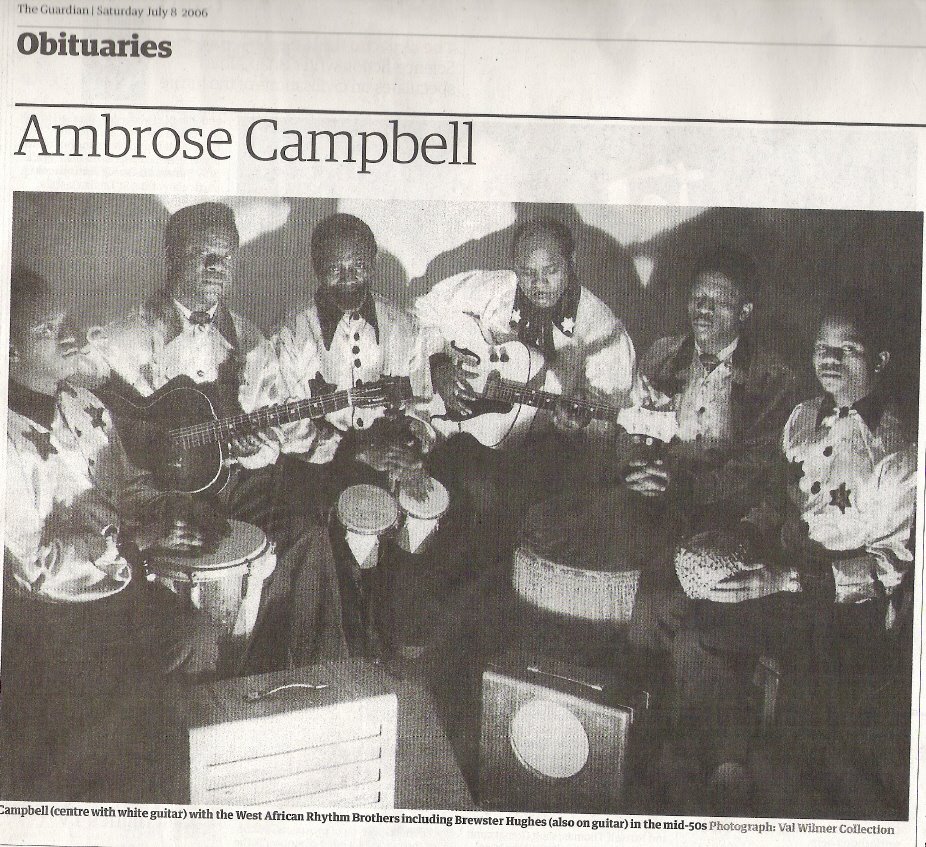
ambrose campbell 1919-2006


As a boy in Nigeria, Ambrose Campbell, who has died aged 86, sang in the church choir and grew up - the son of a minister - under a strict Victorian regime. But after dark he escaped, slipping out to the Lagos waterfront where seamen gathered from along the coast, sharing experiences, drinking palm wine.

The above, from the obituary of Ambrose Campbell - Nigeria's oldest musician who died in the UK last month. Read the obituary by Val Wilmer - in full

on the caine...

This year's winner of the Caine Prize for African Writing will be revealed tomorrow, Monday 10 July. It will be a choice between 5 writers (4 of them women) including Nigeria's Sefi Atta.

The Caine writers - Atta, Muthoni Garland, Laila Lalami, Mary Watson & Darrel Bristow-Bovey - will be at the South Bank Centre on Tuesday 11 July. Hosted by TV personality Jon Snow, the shortlisted writers will be reading from their work.

***

Update, 10 July
South African Mary Watson has won the 7th Caine Prize for African Writing. She got the £10,000 award for her short story, Jungfrau, from Moss (Kwela Books, 2004). Chair of the judges, Dr Nana Wilson-Tagoe described Watson’s winning work as: “a powerfully written narrative that works skilfully through a child’s imagination to suggest a world of insights about familial and social relationships in the new South Africa… It is superbly written and does what a short story should do, by leaving spaces around its narrative in which readers can enter again and again.”

Mary Watson lives in Cape Town. She got the Meritorious Publication Award for her collection of stories, Moss. She is currently working on her first novel - as well as a collaborative novel with a group of other South African writers.

bag lady, a poem

And the poem this week - is mine! This below is published in the current edition of Sentinel Poetry Online. I have 3 poems in the issue, including one that a poet friend has described to me as "morbid", and Promised Land.


Bag Lady

I

Bag lady with sackfuls of regret
Rolled in a knapsack, heaved, hauled
As the mollusc bears around its home.

She moves as with feelers, unseeing
Eyes in rituals of avoidance, noses up
Repelled by a sight they would not see.

Woman to whom things have been done
Sacrificial wearer of scars, bearer of losses
Walking wounded from battles long lost.

II

Bag lady with sackfuls of regret
Tucked deep in under-eye pouches
Stuffed down the protuberant tum.

Beaten to a pulp by life’s fictions
Hers is the joy of a wandering haze
A happy face on life’s sad street.

She walks, magnificent as Monroe
Dark as Alek, regal as Iman - owning
Nothing, she claims ownership still.

At peace with her many loads, knowing
If you must own nothing, own your regrets.


© Molara Wood

azuah's abuja reading

Sky-High Elation at Unoma Azuah’s Reading in Abuja
By
E. E. Sule
As one eats his favourite dinner, downs it with his favourite drink and relaxes satisfactorily, set for a sound sleep, so we took our literary dinner from Unoma Nguemo Azuah’s novel, Sky-High Flames, satisfied that ANA-Abuja had fed us with what we wanted and relaxed into the calm arms of the cold night on Thursday 29th June, 2006, when Unoma was the guest reader at ANA-Abuja’s regular reading.

Isaac Ogezi and I drove from Keffi. He consistently pressed on me a sense of punctuality because he didn’t want us to arrive a minute late and, especially, because Unoma is a writer we have always discussed and have considered our friend because of her kind gesture of sending us her novel when it was just a few days old. We arrived at Reinz Continental Hotel at about four-forty in the evening. Inside the flamboyant hotel reception, bespectacled Ahmed Maiwada, incurable participant of every ANA-Abuja’s activity, greeted us cheerfully. I quickly introduced Isaac to him because I knew they had been friends without meeting each other. Ahmed would rush to his office to pick a copy of Wole Soyinka’s From Zia, With Love he bought as a gift for Isaac, but the latter told him not to bother, that he would collect it another day.

The question held behind my teeth with patience, as Isaac and Ahmed conversed, burst out, "Is Unoma around?" Ahmed replied: "Yes, she is around, but not in the hall now; Emman Shehu is there." Isaac and I went into the hall and there was the big brother [Shehu], cheerful as ever; and standing with him was a tall smiling figure he introduced as Chukwu Eke.

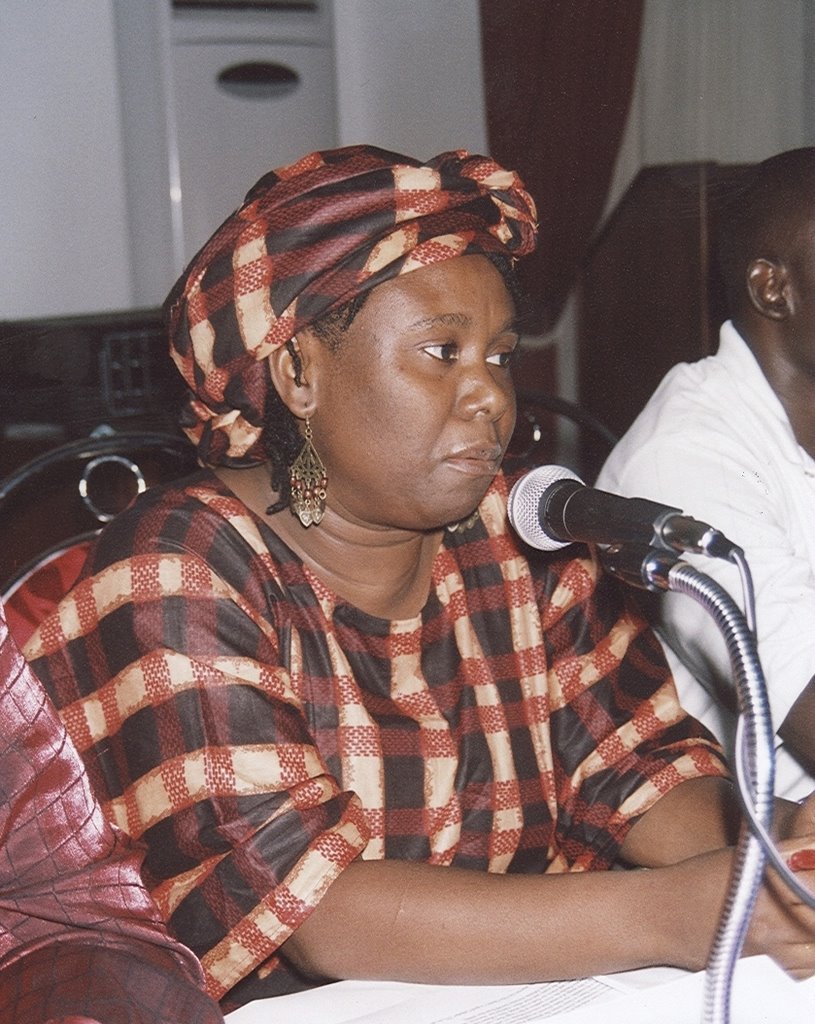
After greetings here and there, we settled down. People kept coming into the hall and I steadied my gaze on the door to see if I could catch Unoma’s face. Her image from the backcover of her novel was getting increasingly sharper on my mind. The programme began without the usual introduction of one standing up to introduce himself/herself; I guess big brother had cleverly edited it out to present Unoma to us as a surprise. Along with others, I was called to the "high table" and my seat was adjacent to the guest reader’s from the left. I was surely taken by surprise when the creator of Ofunne was called to take her seat: the lady I had pinned my eyes on turned out not to be Unoma! A gentle-looking and smiling lady in a simple long wear and headscarf, looking almost matronly, walked gracefully forward and took her seat beside me. I still had to ask, "So you are Unoma" as I shook her hand. And she beamed me a smile and asked if I was Sule and gave me a knowing hug. She would later ask of Isaac. Too, Chinyere Obi-Obasi who was on the high table and had seen Unoma’s picture didn’t believe her eyes. Apart from the writerly simplicity, Unoma looked more humble and quieter than we thought she would be.


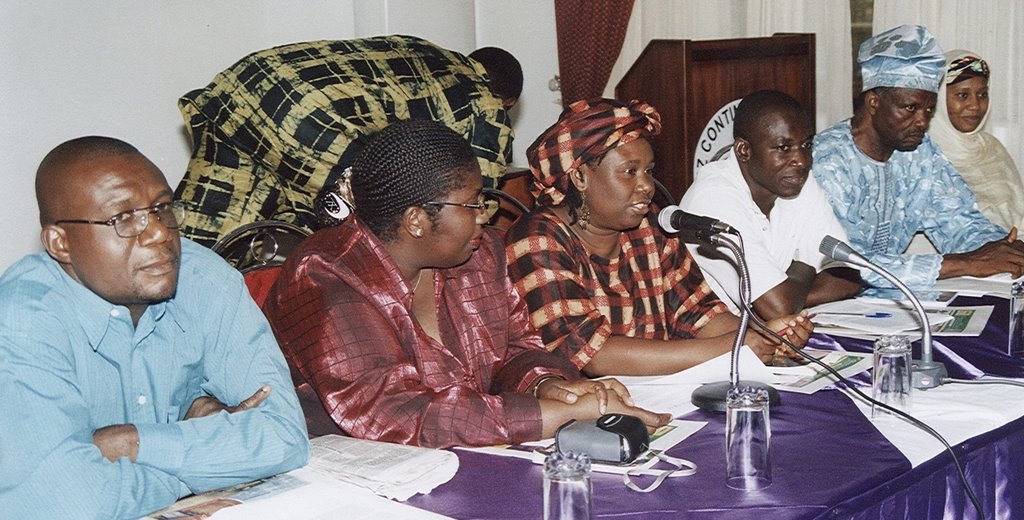
Unoma Azuah is flanked by (L-R) Chukwu Eke, Chinyere Obi-Obasi, Emman Egya Sule, Asimiafele & Hajia Fika.

Big brother MCied the occasion himself; he always does. Aigbokhoaode Asimiafele, chairman of ANA-Abuja think-tank Committee, an elderly man, also on the high table, opened the reading as he read his poem, written in the US like Unoma’s novel. This set the tone of Americanism (I am talking about the racism so-and-so) that would pervade the entire occasion. Then big brother, as a way of introducing the novel to the audience, read a eulogising review of Sky-High Flames by one Christy Williams of the Department of English, University of Hawaii, Honolulu. It was while he was reading that Jerry Agada, ANA’s Vice President, walked in and gave the occasion a national presence. I had all along been wondering where Denja Abdullahi, ANA national secretary, whose presence had always been generous to such occasions in and outside Abuja, was at this time.

Unoma, before reading, apologised that she could not provide copies of the novel because she had been hoodwinked into thinking that copies of the book, which she sent earlier, were available in Nigeria until she came and discovered it was not so. Chinyere had her copy of the novel and it was passed round for everyone to look at. Unoma began her reading in her soft, feminine voice, going through four extracts in such a progression that gave the audience the beginning, the middle and the end of the novel. It was pleasant listening to her reading out the life of Ofunne.

Time for questions and contributions brought out the elation in the audience. Even though a lot of them had not read the novel, and did not have the novels in their hands to follow Unoma’s reading, they asked such intelligent questions about the novel, Unoma’s life, writing and publishing in the United States that made the reading a success.

A lady was interested in knowing whether the story of Ofunne was a fact or fiction. Unoma said although her work was fiction, she had, like most writers, drawn from realities in life. The story, she said, was based on the true-life story of her aunt who, though brilliant and vivacious, was condemned to early marriage that took her life. Isaac ended his contribution, centred on the weakness of Ofunne’s character, by asking Unoma whether she had done research enough to know that syphilis was capable of making one infertile as she had shown in her story. The audience answered for Unoma. Yes, syphilis can destroy the seed in a man or woman.

Ahmed said he had read Unoma’s poetry and thought she was a good "poetess" (Unoma rejected that appellation because of its anti-feministic complexion and we helped her get Ahmed to alter it to "poet"), probably better than a fictionist, and that he expected that she should have published a volume of poetry by now. He also expected a poetic dinner from her that evening. A collection of poems, in limited copies, had been published long ago, Unoma said; she promised to send Ahmed a copy.

A guy was interested in knowing how easy it was to find a publisher in the US and whether one, with his money, could self-publish or not. Unoma answered that it was not easy to find a publisher interested in an African story in America. Out of the about one hundred and twenty publishers she scouted on the Internet, only three were interested in her manuscript. If she hadn’t found a publisher, she wouldn’t have self-published because, apart from the relegation of self-publishing to vanity press, she didn’t have the money to do that. And as a response to Chinyere’s question bothering on editing and reworking, Unoma said she had it tough because her editors kept wanting her to remove something or add something. In fact, the Sister Dolan-Ofunne relationship in the missionary school was elaborated as her publisher’s idea of emphasising the role of the missionary (who are, of course, the white people) in moulding the character of a young black woman.

For Patrick Oguiejiofor, that protagonist of Okigboism, to what extent was Unoma’s pocket fattened by the publishing and marketing of her novel in America. Was she given any advance payment? Unoma said she was given an advance payment but refused to disclose the amount. She also told us how her royalty was worked out.

When it was my turn, I expressed my worry about the paradigm of the woman telling (always) the woman’s story. When will Nigerian women writers tell other stories other than the woman’s story? A concomitant question is, when will Nigerian literature move from the preoccupations of the present to the fantasies of the future as Charles E. Nnolim has advised in one of his recent essays? Unoma’s response was that the woman will stop telling the woman’s story when women are fully emancipated from the subjugation of men in our society.

It was Chukwu, that amiable fellow who descended from the hills of Enugu to Abuja to witness, according to him, the innovation of Emman Shehu-led exco, who sent the hall reverberating in laughter. He took a good look at Ahmed and told us that he (Ahmed) was a good example of the kind of madman a writer should be. Ahmed denied it amidst guffaws. Then Chukwu took his time to convince us that all writers were mad people and unless a person chose to be a deviant in the society, he could not be a good writer. After presenting himself to us as the writerly madman, he made two important points about writing and publishing. First, he said we should de-emphasise the problems of publishing in Nigeria and strive to attain excellence in writing. Publishing works is not the issue, but the issue is how qualitative are the works. A young writer should keep working hard on a manuscript until it is worthy of being a great work before he approaches the problems of publishing. Second, Chukwu warned that we should be careful about denigrating self-publishing, especially in Nigeria. He contextualised his warning in the story of his friend who sneered at self-publishing in Nigeria, took a long jump into America, thinking that he would find a publisher that would make him a Chimamanda. After going round the US without finding a single publisher interested in his manuscript, he returned to Nigeria, wretched, and alas! he self-published the manuscript with the worst printer in Nigeria.

After taking that dose of humour from Chukwu, we took an Abuja Literary Society announcement from Ken Ike before we settled for a light refreshment of tea, coffee, chicken, cake and club sandwich during which we chatted freely, hugging and handshaking one another. Unoma, the celebrity of the day, was crowded, had snapshots with people and we were all sad that she didn’t have copies of her novel to autograph for those who didn’t have. Ahmed, now going versatile, introduced a Nupe film he produced along with ANA-Niger actors to me. He autographed a copy for me. I trapped Ifeoma Chinwuba, author of Merchant of Flesh, in a brief feministic chat. Chinyere introduced me to her unwriterly gentleman of a husband and thereafter engaged me in jokes. She is a well of jokes and laughter.
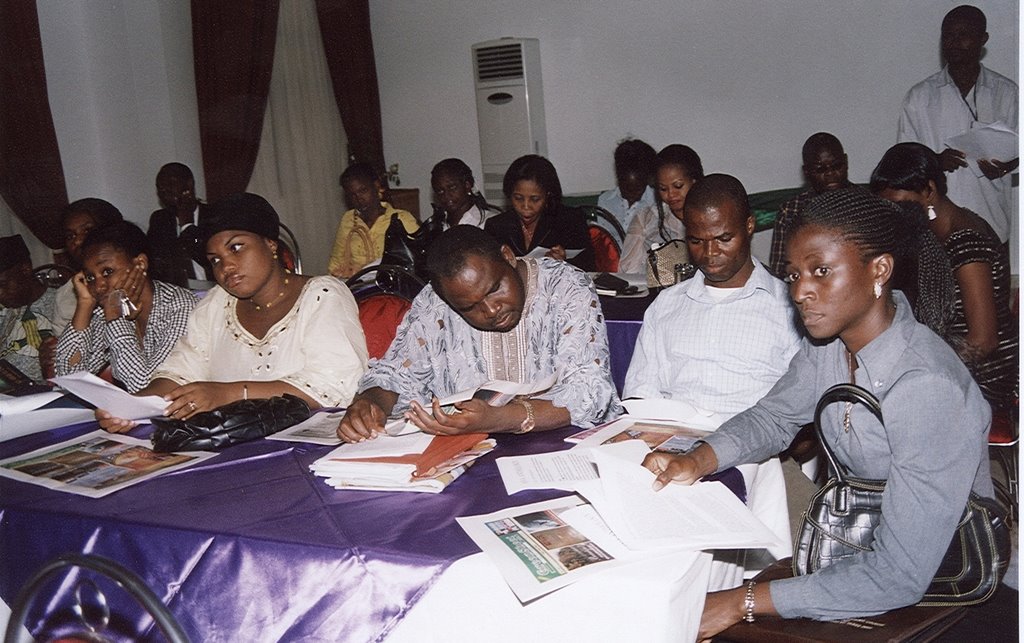
A section of the audience...

Since everything that has a beginning must have an end; since every delicious dinner will certainly finish, we all reached that moment where the best thing to say was to bid one another goodbye. Unoma herself accompanied some people to the hotel gate since she stayed in the same hotel. We went into the cold arms of the night, ready for sound sleep.

*Images: courtesy of ANA Abuja